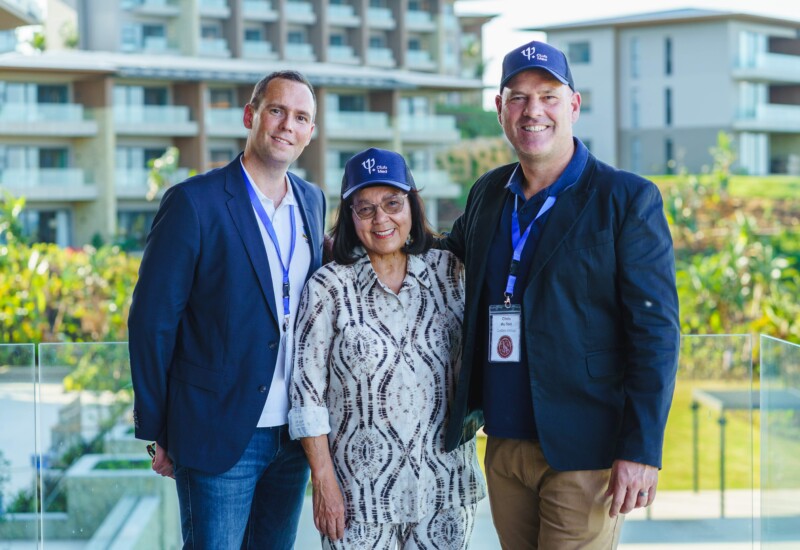
South Africa’s tourism sector received a major vote of confidence this week as government leaders, tourism stakeholders and Club Med executives gathered at the upcoming Club Med South Africa Beach & Safari Resort on KwaZulu-Natal’s North Coast ahead of Africa’s Travel Indaba.
The event highlighted the landmark development’s anticipated contribution to tourism growth, job creation, skills development and regional economic upliftment, while positioning the resort as one of the country’s most significant tourism investments in recent years.
Speaking at the event, South Africa’s Minister of Tourism, Patricia de Lille described the development as a powerful example of successful collaboration between government and the private sector, noting that tourism investment remains critical to the country’s broader economic growth strategy.
“Tourism investment is not only about building new products,” said Minister de Lille. “It is also about maintaining and enhancing our existing attractions while diversifying the experiences available to travellers.”
The Minister noted that South Africa welcomed a record 10.5 million international tourists in 2025, with 2.9 million visitors already recorded in the first quarter of 2026, demonstrating strong momentum for the sector.
A Tourism Development of Unprecedented Scale
The Club Med South Africa development has already created more than 2,300 direct and indirect jobs during construction, with between 600 and 650 permanent positions expected once operational. The project has also driven significant skills development initiatives, including hospitality scholarship programs for young South Africans.
Chris du Toit, Project Director from Collins Residential, reflected on the scale and significance of the project, which transformed former sugarcane fields into a world-class tourism destination within just 26 months.
“This project proves that developments of this scale can be delivered successfully in South Africa,” said du Toit. “A lot of people believed a greenfield tourism project of this magnitude could not be achieved locally, but this development demonstrates what is possible through collaboration, innovation and confidence in the South African market.”
The project was funded entirely through South African investment, with local banks and suppliers playing a major role in bringing the development to life. At peak construction, approximately 1,850 workers were on site daily, contributing to a total of 4.5 million man hours completed with zero lost-time injuries.
Environmental sustainability also remained a central focus throughout the development, including the planting of approximately 4,000 indigenous trees to help restore the coastal forest environment.
A 16-Year Vision Comes to Life
Managing Director of Club Med South Africa, Olivier Perillat-Piratoine, described the resort as the culmination of a 16-year journey and a defining milestone for both Club Med and South African tourism.
“We do not take the success of this property for granted,” he said. “This has been an extraordinary human journey involving expertise, talent and collaboration from South Africa and around the world.”
Perillat-Piratoine explained that the vision for Club Med South Africa was built around combining South Africa’s iconic beach and safari experiences into a single integrated offering.
“Beach and bush is an extraordinary combination for today’s global traveller,” he said. “South Africa offers a travel and hospitality experience unlike anywhere else in the world.”
Global Demand Surpasses Expectations
Ahead of opening, Club Med launched a global “Destination South Africa” campaign promoting the country to its more than two million customers worldwide under the headline: South Africa: The Adventure of a Lifetime.
The campaign quickly gained international traction, with South Africa trending among Club Med’s top three most in-demand global destinations at launch and with bookings. Perillat-Piratoine noted that shifting global travel dynamics and uncertainty in some international markets are creating new opportunities for destinations like South Africa.
“With direct air access, remarkable experiences and a stable tourism offering, South Africa is increasingly positioned as a highly attractive destination for international travellers,” he said.
The resort has already attracted bookings from more than 40 international markets, demonstrating strong global demand ahead of the official opening. Early bookings are being driven predominantly by the European market, followed closely by strong domestic demand from South African travellers.
A New Era for Domestic and MICE Travel
Demand from both the leisure and MICE (Meetings, Incentives, Conferences and Events) sectors has shown exceptionally strong momentum, positioning the resort as a meaningful new option for corporate groups and incentive travel within South Africa.
Previously, many South African companies looked offshore for premium all-inclusive incentive and conference experiences. The launch of Club Med South Africa now offers the local market an internationally recognised destination experience on home soil.
“We already have thousands of leisure guests booked before the resort has even officially opened,” said Perillat-Piratoine. “At the same time, major South African and international companies have already secured conference and incentive bookings.”
Minister de Lille also highlighted ongoing efforts to improve accessibility to South Africa through enhanced digital visa systems for key source markets including India, China, Indonesia and Mexico, helping strengthen the country’s competitiveness as a global tourism destination.
The Catalytic “Club Med Effect”
Concluding the event, stakeholders reaffirmed their confidence that Club Med South Africa will play a transformative role in driving tourism growth, investment and long-term economic opportunity for both the region and the country.
“This is a world-class product that showcases the diversity and quality of South Africa’s tourism offering,” said Minister de Lille. “We are proud to support and promote it as part of our international tourism marketing efforts.”
Beyond the resort itself, the development is expected to have a far-reaching catalytic effect on tourism and economic growth across KwaZulu-Natal and South Africa more broadly.
Referred to by project leaders as the “Club Med effect,” the development is anticipated to stimulate increased international visibility, regional infrastructure investment, local supplier growth, skills development and broader tourism expansion throughout the North Coast and surrounding areas.
Historically, Club Med developments in destinations such as Cancun and the Dominican Republic have played a significant role in unlocking wider regional tourism economies, attracting additional hospitality investment and accelerating destination growth.
Club Med now has the potential to mark a similar turning point locally, helping position both South Africa and KwaZulu-Natal on a new trajectory as globally competitive, experience-led tourism destinations.
As international demand continues to grow and travellers increasingly seek authentic, value-driven experiences, the development is being viewed not simply as the launch of a new resort, but as a catalyst for the future evolution of South Africa’s tourism landscape.