For a growing number of travellers, the holiday high is no longer built around sundowners and wine pairings. It is about better sleep, clear mornings, outdoor immersion, wellness, and experiences that do not need a buzz to feel indulgent. In South Africa, where the scenery does half the seduction for free, sober-curious travel may be less a niche than the next obvious evolution.
There was a time when travel marketing treated alcohol as shorthand for pleasure. A glass of Cap Classique at check-in. A sunset G&T. A generous red beside the fire. Lovely, yes. Mandatory, no.
“The new traveller is not necessarily teetotal, but they are increasingly intentional. Global travel media has been tracking the rise of sober-curious travel, or “dry tripping”, while South African lifestyle coverage has noted the same local shift, driven by wellness, mental clarity, changing social norms and, frankly, the growing appeal of not wasting the next morning,” says Wayne Neath, commercial director of Premier Hotels & Resorts.
“The global market for non-alcoholic wine was valued at $2.54 Billion (USD) in 2025 and is growing by 10% every single year. People love bubbles the most—sparkling non-alcoholic wine holds 59.6% of the entire market,” says Dennis Chiang, MD of Norah’s Valley, a brand that offers travellers a sophisticated ritual of premium non-alcoholic wine.
In South Africa, that trend makes particular sense. We are not short on experiences that reward clear senses. This is a country of sunrise hikes, salt-air promenades, mountain passes, game drives, forest walks and long coastal weekends where the real luxury is feeling awake enough to enjoy them properly. Here, sober travel does not read as austere. It reads as sharp, modern and quietly aspirational.
That is where a group like Premier Hotels & Resorts fits neatly into the conversation. Its portfolio spans urban hotels and nature-led resorts across South Africa, positioning itself for both business and leisure travellers, with resorts in scenic settings designed around relaxation and outdoor activity. In editorial terms, that matters: sober-curious travel works best when the destination itself has enough texture to hold the story without needing a bar tab as a prop.
Take Premier Hotel Cape Town in Sea Point. With ocean and mountain views, a pool, sundeck, library and restaurant, it sits in one of the country’s most naturally active urban neighbourhoods. This is the sort of stay that lends itself to promenade walks at first light, a swim, a strong coffee, and dinner that does not need cocktails to feel cosmopolitan. It is less about abstinence than about reordering the experience around energy, appetite and place.
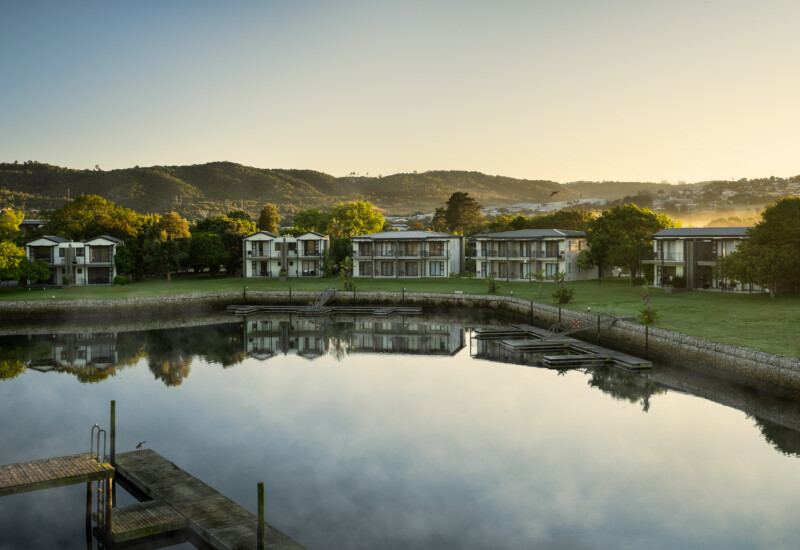
Then there is Premier Resort The Moorings in Knysna, set on 4.5 hectares of woodland gardens along the lagoon, with private lagoon access and an on-site day spa. That kind of property lends itself effortlessly to the new language of indulgence: slower mornings, spa treatments, lagoon air, proper rest. In the sober-travel framing, wellness stops being a side dish and becomes the trip itself. Or revel in the freshness of the South Coast’s ocean air, where immersion in the underwater world becomes almost intoxicating at Premier Hotels Cutty Sark.
Further inland, Premier Resort Sani Pass offers the sort of Drakensberg setting that makes the whole conversation feel slightly ridiculous in the best possible way. When you are surrounded by mountain views and outdoor adventure, the idea that pleasure must be poured into a glass begins to look a bit lazy. The same logic applies to Premier Resort Mpongo Private Game Reserve, where wildlife, open space and safari-style immersion offer the kind of sensory richness that is entirely intact without alcohol at the centre.
This is also why sober-curious travel should not be pitched as a moral story. Nobody wants a sanctimonious holiday. The stronger editorial angle is that travellers are becoming more selective about what counts as luxury. Better sleep. Better skin. Better mornings. More present family time. More memorable landscapes. More appetite for the actual destination. South African reporting suggests this mindset is being driven especially strongly by wellness-conscious consumers and younger travellers who see drinking less not as deprivation, but as a smarter trade.
For hospitality brands, the implication is obvious. The winning property is no longer just the one with a good wine list. It is the one with enough substance to carry the guest from sunrise to sleep: good food, restorative spaces, family-friendly or adventure-ready settings, and a sense of place strong enough to make the stay feel complete on its own terms. Premier Hotels & Resorts already leans into that broad mix, from coastal escapes and family packages to city stays and nature-based resorts, which makes it a credible local lens through which to tell the bigger story.
In the end, sober travel in South Africa is not really about what is missing from the glass. It is about what comes back into focus when the glass is no longer the main event.