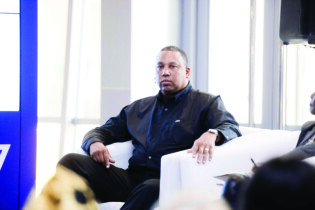

The Exhibition Planner talks to Ishmael Atanasi, Chief Executive Officer, GL events South Africa about building connections and how GL events is redefining the exhibition experience from the ground up.
Walk into any successful exhibition and it is easy to be captivated by what unfolds before you. Exhibition stands showcase the latest innovations, conversations spark new partnerships, conference sessions inspire fresh thinking and thousands of visitors move effortlessly through carefully designed spaces. To the attendee, everything appears seamless.
What few people see is the immense planning, collaboration and expertise required to create that experience.
Long before the doors open, organisers, venues, designers, contractors, logistics specialists and service providers have already spent months working towards a shared goal. Every structure, every visitor pathway, every networking space and every branded environment has been carefully considered. It is this invisible ecosystem that transforms an empty exhibition hall into a thriving marketplace of ideas and opportunity.
For GL events South Africa, creating these environments is far more than a business—it is a philosophy.
As part of the internationally renowned GL events Group, the South African business has become one of Africa’s leading providers of exhibition and event infrastructure, supporting everything from international trade exhibitions and conferences to sporting events and large-scale government initiatives. Yet despite the impressive portfolio, Chief Executive Officer Ishmael Atanasi is quick to point out that the company’s purpose extends well beyond building exhibition stands.
“Our purpose is reflected in our tagline,” he says. “We bring people together by creating platforms where businesses can engage with customers, stakeholders and industries in meaningful ways.”
That simple statement captures what modern exhibitions have become. Today’s events are no longer about displaying products; they are about creating experiences that encourage collaboration, generate business opportunities and strengthen entire industries. It is also why this edition of The Exhibition Planner adopts a true 360-degree perspective, exploring every stage of the exhibition journey—from strategy and planning to visitor engagement, sustainability and return on investment. Few organisations understand that complete journey better than GL events.
From Numbers to Industry Leadership
Atanasi’s route into the exhibition industry was anything but conventional. A qualified accountant with an MBA, an MSc in Finance and professional memberships including CIMA and ACCA, his early career was firmly rooted in finance across the private, public and NGO sectors. When he joined Oasys in 2007—the company that would later become GL events South Africa—his intention was simply to build a successful finance career. Curiosity, however, changed everything.
“I became interested in understanding where the revenue actually came from,” he explains. “Rather than simply seeing money reflected in the bank account, I wanted to understand how the business worked from beginning to end.”
That curiosity saw him move beyond spreadsheets and financial reporting to immerse himself in every aspect of the organisation. He learned how projects were designed, manufactured and delivered, how client relationships were built and how successful exhibitions relied on hundreds of interconnected processes working in perfect harmony.
Over time, that understanding transformed him from finance executive to business leader, culminating in his appointment as CEO in 2020. It was, perhaps, the most challenging time imaginable to lead an events business. As the COVID-19 pandemic brought exhibitions across the world to an abrupt halt, the industry faced unprecedented uncertainty. Yet rather than waiting for recovery, GL events adapted its expertise to meet a different national need by delivering critical field hospital infrastructure, an assignment unlike anything the company had previously undertaken.
“It challenged us to think differently,” Atanasi reflects. “But it also reinforced our ability to adapt, solve problems and deliver under pressure.”
That period became a defining chapter for both the company and its leadership, proving that resilience is built not by avoiding change but by embracing it.
Building More Than Exhibition Stands
One of the biggest misconceptions about GL events, Atanasi believes, is that the company simply builds exhibition stands. In reality, its role begins long before construction teams arrive onsite.
Every project starts with understanding what the organiser wants to achieve, who the audience is and how the exhibition environment can support those objectives. From there, GL events works alongside organisers to translate strategy into physical spaces that encourage interaction, business engagement and memorable visitor experiences.
“The moment we begin working with an organiser, we become an extension of their brand,” says Atanasi. “Our responsibility is to understand their vision and help bring it to life.”
That partnership approach has become increasingly important as exhibitions evolve. Visitors expect immersive experiences. Exhibitors demand measurable return on investment. Organisers require flexible, reliable partners capable of delivering increasingly sophisticated events. Meeting those expectations requires far more than technical expertise. It requires collaboration. Planning, Atanasi believes, remains the single most important ingredient behind every successful exhibition.
“There are many stakeholders involved in delivering a live event,” he explains. “Everyone has a role to play and success depends on ensuring each person understands when they need to contribute and how their work supports everyone else’s.” That philosophy perfectly reflects the industry’s evolution.
Exhibitions are no longer isolated projects but carefully coordinated ecosystems where success depends on every contributor working towards the same outcome.
Innovation with Purpose
Technology has fundamentally changed the way exhibitions are planned and delivered. Artificial intelligence, digital collaboration platforms and immersive technologies are no longer futuristic concepts—they are becoming everyday business tools. For GL events, technology is not replacing people; it is empowering them.
“Technology is here to stay,” Atanasi says. “You either adapt or you become extinct.”
One area where this transformation is particularly evident is exhibition design. Artificial intelligence now enables designers to generate highly realistic visual concepts within minutes, allowing clients to see creative ideas long before technical drawings are produced. This significantly shortens approval processes while encouraging greater collaboration during the earliest stages of planning.
Technology is also improving onsite operations. Digital project management, cloud-based documentation and real-time updates ensure every team works from the latest information, reducing delays, improving communication and increasing efficiency throughout the build process.
Innovation, however, is only meaningful when it delivers better experiences. Visitors increasingly expect exhibitions to be interactive, engaging and memorable. Whether through immersive digital displays, intelligent wayfinding or integrated technology that allows exhibitors to better showcase products and services, the objective remains the same: creating environments where meaningful conversations can take place.
Sustainability as a Business Imperative
Alongside technology, sustainability has become one of the defining conversations shaping the future of exhibitions. For Atanasi, sustainability is no longer a trend or a marketing exercise—it is rapidly becoming an expectation. Many exhibitors now report against Environmental, Social and Governance (ESG) objectives, requiring every aspect of their exhibition participation to align with broader sustainability commitments.
Recognising this shift, GL events has invested in innovative solutions such as reusable Ecomod exhibition systems manufactured from compressed cardboard, enabling infrastructure to be reused across multiple editions while significantly reducing waste.
Importantly, sustainability does not mean compromising creativity or quality. Instead, it challenges the industry to think differently about materials, design and long-term value, ensuring exhibitions remain commercially successful while reducing their environmental footprint.
Building Africa’s Future
As Africa’s exhibition industry continues to grow, South Africa remains uniquely positioned as a gateway to the continent. According to Atanasi, that advantage extends beyond world-class venues and infrastructure.
It lies in the people. South Africa’s technical expertise, high safety standards and proven ability to deliver complex international events continue to earn global recognition. Through the international GL events network, South African teams regularly contribute to major projects around the world, including the Olympic Games, the Asian Games and global exhibitions, before bringing that experience back to local projects.
Equally important is developing the next generation. GL events actively invests in learnerships, youth employment initiatives and skills development programmes, recognising that the future of the exhibition industry depends on creating opportunities for young professionals to grow and lead.
For Atanasi, leadership is not measured solely by financial performance but by the people an organisation develops and the positive impact it leaves on the industry. As our conversation draws to a close, he offers one final reflection that perhaps best captures both his own leadership philosophy and the culture of GL events.
“We are only as strong as our weakest link. If every part of the value chain supports one another and operates with integrity, the entire industry becomes stronger.”
It is a fitting conclusion. Every exhibition eventually comes down. The structures are dismantled, the halls fall silent and the lights are switched off. Yet the true legacy of an exhibition has never been measured by the infrastructure left behind. It lives in the partnerships formed, the businesses launched, the ideas exchanged and the relationships that continue long after the final visitor has departed.
Perhaps that is why GL events has earned such a respected place within Africa’s business events industry. It has never simply been in the business of building exhibition environments. It has been in the business of creating the spaces where industries connect, innovation flourishes and opportunities take shape.
Under Ishmael Atanasi’s leadership, that vision continues to evolve. As exhibitions become more collaborative, more sustainable and increasingly technology-driven, GL events is not merely responding to change—it is helping shape what comes next. Because in the end, the company’s greatest achievement is not the structures it builds. It is the connections those structures make possible.