A shift is taking place within parts of the eco-tourism sector, where hospitality is increasingly being integrated into the long-term management of natural landscapes. Rather than operating alongside conservation as a separate activity, tourism is becoming one of the mechanisms through which environmental restoration, habitat protection and land stewardship are funded and sustained over time.
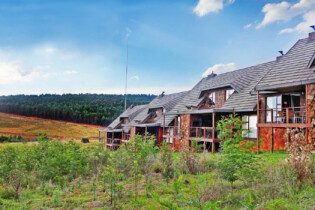
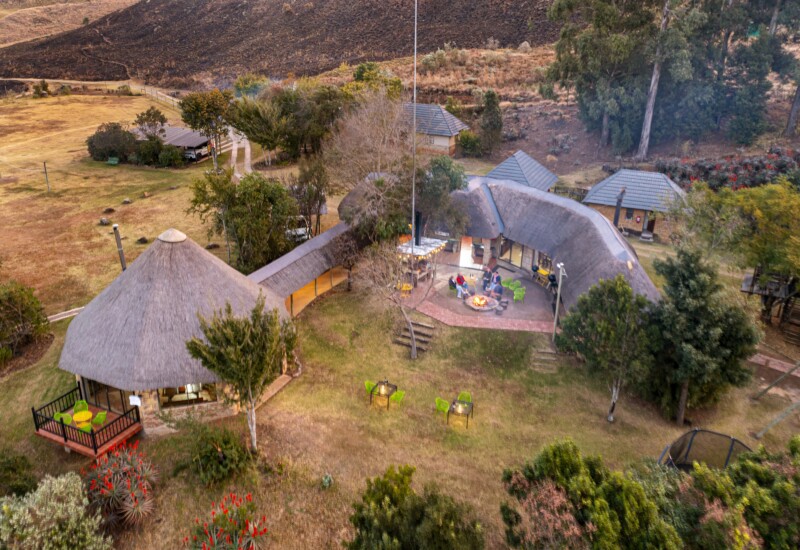
Sungubala Eco Camp in the Northern Drakensberg operates within this model, where tourism contributes directly to the ongoing care of the surrounding landscape. For Custodian Megan Bedingham, conservation is defined less by individual projects and more by continuous responsibility, requiring long-term financial sustainability if environmental work is to endure across privately managed conservation areas.
“All conservation spaces have got to be income generating in some way if you want to sustain them, because you cannot conserve land without income,” says Megan Bedingham. “It’s expensive to eradicate invasive species and install fencing where needed, and it’s essential to maintain a constant presence on the land to prevent poaching.”
At Sungubala, this approach is reflected in day-to-day operations. Visitors enter a working landscape under active ecological management, where conservation is not treated as a separate initiative but is built into how the destination functions. Tourism activity contributes towards the ongoing work required to maintain and restore the surrounding environment.
Land management is continuous and shaped by seasonal cycles. It includes invasive vegetation removal, erosion control, controlled burning, habitat restoration and the maintenance of access routes to ensure visitor movement does not place pressure on sensitive areas. Grassland systems, indigenous forests and water sources all require regular attention to maintain ecological balance in a landscape shaped by both natural processes and human use.
“You have to keep going back every growing season,” says Megan Bedingham. “Alien vegetation never stops, and neither does the need to maintain the land. Even erosion repair on paths takes sustained, ongoing effort.”
Environmental management also extends into infrastructure and operations. Megan Bedingham says sustainability often develops through gradual adjustment rather than large-scale interventions. At Sungubala, solar capacity has been expanded to support electric refrigeration, reducing reliance on older systems while retaining gas water heating within a practical, evolving energy setup.
These principles are reflected in everyday operations. Cleared invasive vegetation is reused where possible, waste reduction measures are built into routine practice, and efforts are made to minimise unnecessary single-use packaging across guest operations.
Over time, the surrounding landscape has shown signs of ecological recovery. Wildlife such as eland have returned to areas where they were previously absent, while indigenous forest patches continue to regenerate in locations affected by historical land use. The formal gazetting of the Northern Drakensberg Nature Reserve has strengthened coordination between neighbouring conservation areas, supporting more aligned environmental management across the broader region.
Alongside its environmental work, Sungubala Eco Camp’s involvement with the Royal Drakensberg Education Trust (RDET) reflects a broader commitment to long-term community development. Operating across surrounding rural communities, RDET works with educators, caregivers and local partners to strengthen early childhood development and improve access to foundational learning opportunities.
The Trust focuses on literacy and numeracy foundations, school readiness and practical early learning environments in under-resourced communities. It also supports training for early childhood practitioners and continuity in learning where access to resources remains limited.
“The Trust works closely with educators and caregivers in surrounding communities,” says Megan Bedingham. “It’s about building strong foundations early on, especially where resources are limited and continuity in learning is difficult to maintain.”
Megan Bedingham forms part of a multi-generational family involvement in conservation-linked hospitality in the Northern Drakensberg dating back to 1941. Throughout that history, development has remained gradual, with emphasis placed on maintaining and improving the land as a foundation for long-term stewardship across generations.
As conservation models evolve, approaches that connect tourism directly to environmental stewardship are attracting increasing attention. At Sungubala Eco Camp, that principle is reflected in daily operations, where visitor activity contributes directly to the ongoing care, restoration and protection of the landscape itself.