Radisson Safari Hoedspruit, a Verified Net Zero Hotel combines renewable electricity, electrified operations and lower-carbon guest experiences, supporting the Group’s ambition to reach 100 Verified Net Zero hotels by 2030.

Radisson Hotel Group announces that Radisson Safari Hotel Hoedspruit has become Africa’s first Verified Net Zero hotel, marking a significant milestone in the transition towards more sustainable hospitality on the continent. The achievement demonstrates how an existing safari hotel can significantly reduce its environmental impact through changes across energy, dining, waste management, water conservation and responsible procurement, while maintaining the comfort and service guests expect.
Radisson Hotel Group’s Verified Net Zero (VNZ) Hotels program addresses carbon emissions across all three scopes, virtually eliminating Scope 1 (direct emissions) and Scope 2 (purchased energy) emissions, significantly reducing Scope 3 (value chain) emissions, and addressing residual emissions through carbon removal credits. Verified Net Zero hotels operate on 100% renewable energy and incorporate low-carbon dining and waste minimization practices, with independent third-party verification by TÜV Rheinland.
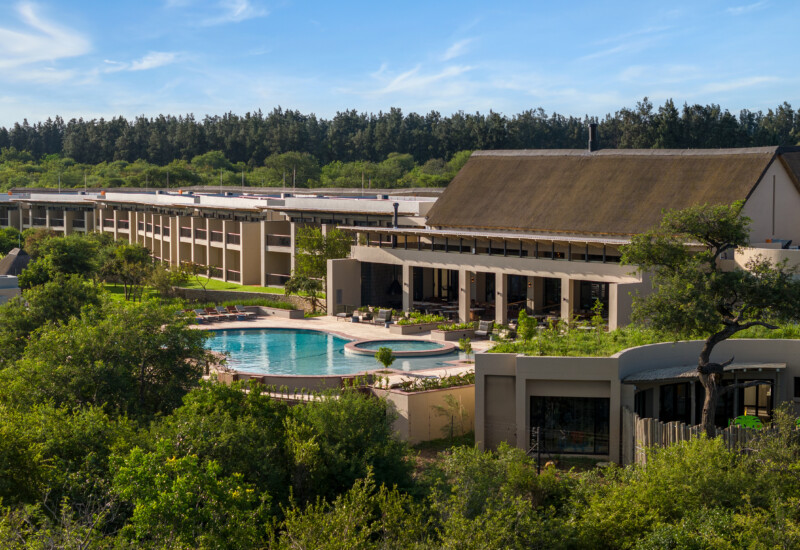
Located in South Africa’s Limpopo province, close to Kruger National Park and Blyde River Canyon, the 138-room hotel brings the program to a destination where the natural environment is central to the travel experience. Its transformation reflects Radisson Hotel Group’s approach to embedding sustainability into everyday hotel operations, from renewable-energy-powered guest rooms to the food served in its restaurants and M&E.
Tim Cordon, Chief Operating Officer, Middle East, Africa and South East Asia Pacific at Radisson Hotel Group, said: “Bringing our Verified Net Zero program to Africa is an important step in making lower-carbon hospitality a practical choice across more destinations. At Hoedspruit, the natural surroundings are a defining part of why guests visit, making this a particularly meaningful place to introduce the program. The hotel demonstrates how investment in renewable electricity, electrification and everyday operational changes can reduce environmental impact while maintaining a compelling guest experience. It also gives our owners and teams across Africa a practical example of how existing hotels can contribute to the transition toward net zero.”
Renewable electricity and electrified operations
The hotel combines on-site solar generation with renewable electricity procured through renewable guarantees of origin and, as of 2027, a solar wheeling agreement. Under this arrangement, a renewable energy supplier feeds solar-generated electricity into the national grid, with an equivalent contracted volume allocated to the hotel’s electricity consumption.
Electrification extends across key areas of the property. The kitchen makes extensive use of electric equipment. Heat pumps provide hot water for guest rooms, while electric golf carts and three-wheel utility vehicles support daily operations, helping eliminate fossil fuels.
Reducing waste and conserving water
The hotel recycles 100% of its wastewater through its own treatment plant, integrating water recovery into its daily operations. Waste separation and specialist recycling partnerships support its ambition to divert all waste from landfill. Shodulla Recycling handles materials including plastic, glass and paper, while Egg Brothers processes food waste through composting and worm-farming initiatives.
To minimize waste, bulk bathroom amenities reduce plastic consumption with containers returned to the supplier through a closed-loop recycling system that ensures 100% recycling and zero waste to landfill. Glass water bottles further reduce packaging waste, while additional amenities are provided on request to avoid unnecessary consumption.
Guests are also encouraged to support these efforts through towel reuse and flexible housekeeping options, helping conserve water and energy while reducing the use of cleaning products. The STAY e-concierge app will bring hotel information and guest requests into one digital platform, reducing printed materials in bedrooms and supporting more direct communication with the hotel team.
Lower-carbon dining and responsible sourcing
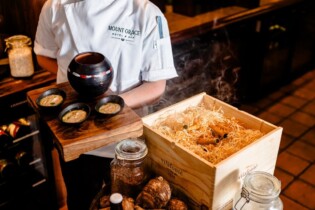
Working with food sustainability platform Klimato, the hotel is introducing carbon-labeled menus that help guests understand the emissions associated with their dining choices. Carbon-footprint data also supports the culinary team in reviewing ingredients and recipes, developing lower-carbon options and managing the impact of its food offering. Low-carbon options are given priority on menus and buffets.
The approach extends to supplier partnerships. Through Zanetti Collection, used Hausbrandt coffee bags are upcycled into reusable shopping bags by a local community sewing project, supporting employment and social programs. Compostable coffee capsules and Ronnefeldt tea products with recyclable packaging and compostable tea bags further support waste reduction.
Staff training, energy monitoring and preventative maintenance underpin these initiatives, making resource efficiency part of everyday decisions across housekeeping, engineering, food and beverage, and front office.
Inge Huijbrechts, Chief Sustainability & Security Officer at Radisson Hotel Group, said: “Verified Net Zero requires us to look beyond a hotel’s energy supply and address the wider footprint of its operations. Independent verification by TÜV Rheinland provides a consistent framework and gives guests, owners and corporate customers greater confidence in the hotel’s credentials. Bringing the program to Africa is an exciting proof that Verified Net Zero can work everywhere and strengthens our understanding of how to apply this approach across different destinations as we work toward 100 Verified Net Zero hotels by 2030.”
The Verified Net Zero program
Staying at Radisson Safari Hoedspruit, a Verified Net Zero Hotel, allows guests to experience how comfort, innovation and sustainability can come together in a safari destination. The comprehensive program addresses the carbon footprint of the hotel’s energy use, covering Scopes 1 and 2 as defined by the Greenhouse Gas Protocol, alongside its operational and supply chain footprint under Scope 3.
The program follows a reduction-first approach. Scope 1 and 2 emissions are near-eliminated through electrification and renewable energy. Operational Scope 3 emissions are reduced through targeted changes across food and beverage, waste, laundry, amenities, procurement and hotel operations. At Hoedspruit, these measures include renewable electricity, electrified equipment, lower-carbon menus, recycling and composting, reduced packaging and more efficient use of resources.
Residual emissions that cannot yet be eliminated are addressed as a final step through carbon credits procured via Greentrade from the South Africa-based GRASS project. Independent verification by TÜV Rheinland assesses the hotel’s compliance with the Net Zero Methodology for Hotels, providing transparency and credibility.
With views of the Drakensberg Mountains, 138 rooms and suites including options with private pools, dining venues, spa facilities and meeting spaces, Radisson Safari Hoedspruit, a Verified Net Zero hotel brings the program to both leisure stays and business gatherings. Guests can explore the region’s wildlife and landscapes while staying at a hotel that embeds emissions reduction and resource efficiency into its operations.
The launch supports Radisson Hotel Group’s ambition to reach 100 Verified Net Zero hotels by 2030, extending a program already operating across the UK and Nordic markets to its first African destination.
For bookings and hotel details, visit Radisson Safari Hoedspruit on RadissonHotels.com