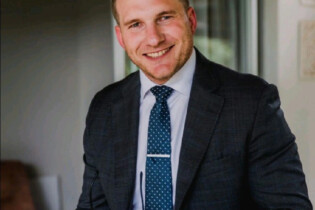
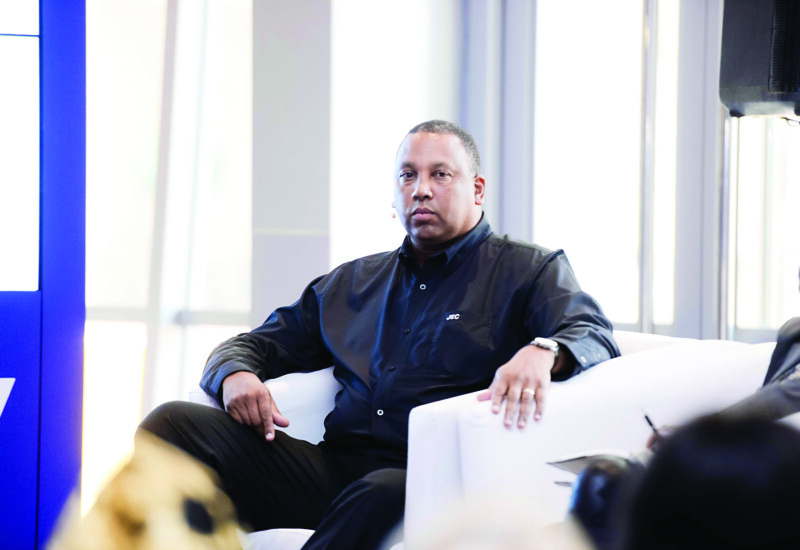
For more than three decades, Craig Newman has shaped South Africa’s exhibition and events landscape with a quiet resolve and a fierce commitment to delivery. A drummer-turned-dealmaker, entrepreneur-turned-venue leader, and association figurehead-turned-corporate executive, his journey mirrors the evolution of the sector itself—restless, resilient, and relentlessly people-centred.
Meetings asked Craig who he is outside of job titles and boardrooms, and the answer arrives without hesitation: husband and father. Married for over 26 years, he lights up when speaking about his wife and three children—twin daughters (22) and a son (19)—each fiercely sporty, each chasing opportunities across the globe. His own passions, unsurprisingly, are kinetic: two-hour padel sessions three times a week, rounds of golf, and, still, the backbeat of his first love—music. Before business cards and board packs, Craig played drums professionally in Johannesburg from 1984 to 1990. Rhythm, it turns out, would prove the perfect training for an events career defined by timing, tempo, and teamwork.
FALLING (PURPOSEFULLY) INTO EXHIBITIONS
Like many who find their way into exhibitions, Craig “fell into it”—first through below-the-line activations in the early 1990s for major parastatals. When that company folded, he founded Silver Lining Enterprises and kept the work moving, ultimately producing the first Eskom Small Business Development Exhibition at a Soweto campus in 1995. The lesson was simple and enduring: get in the arena, deliver for the client, and doors open.
Opportunity soon knocked in the form of Reed Exhibitions, then the dominant force in the exhibitions industry. Reed acquired Silver Lining Enterprises in 1996 and, with it, Craig gained a crucible. He negotiated a month a year in the UK office—an invaluable immersion in the operational and commercial discipline of world-class shows. By 1999, the entrepreneurial tug resurfaced; he exited Reed. Within months thereafter, a media group appointed him CEO. The stretch into corporate governance—“reporting, structures, accountability”—rounded out a skill set that would later serve him (and the industry) exceptionally well.
OWNING THE PLATFORM
Craig’s career pivot—and the moment he counts as most defining—came when he moved from organiser to venue owner-operator. Joining the ownership of a major Johannesburg venue in the mid-2000s, he transitioned from liquidator oversight to hands-on leadership of a national asset. “Globally in our sector, venues are top of the food chain,” he notes. “Ownership gave me the stability to build, and the responsibility to deliver.”
That vantage point—having worked across the three pillars of the industry (venue, organiser, and infrastructure/service provider)—is rare. It also proved invaluable when a global group later acquired the South African business. The corporate transition had its frictions (layers of approval replace the speed of a founder’s round-table), yet Craig’s broad operational grounding meant he could set the pace and expectation while aligning to international systems. “You adjust,” he says simply. “And you make it work.”
CREDIBILITY, ACCOUNTABILITY, AND DELIVERY
Pressed on the sector’s biggest challenge, Craig doesn’t reach for macro-economics or policy jargon. He points to credibility. “If a client has one bad experience, they don’t say, ‘Company X let me down.’ They say, ‘Exhibitions don’t work.’ And then you’ve lost them for years.” In a small South African market, one negative story travels fast—regardless of stand size or budget. The antidote, for Craig, is non-negotiable delivery and visible accountability. “Too many shortcuts. Too many half-done jobs. We have to create a mindset of delivery—venue, organiser, or supplier.”
This philosophy comes into sharp relief when he evaluates events. He doesn’t measure success by square metres; he measures it by exhibitor investment—the confidence signal that stands, staffing, and content will meet high-value buyers and peers. “If exhibitors are spending, they believe the show will deliver. Our job is to make sure it does.”
THE LONG ROAD BACK: REOPENING AFTER THE SHUTDOWN
The pandemic’s shockwave flattened the live economy. For Johannesburg Expo Centre , a temporary pivot to field-hospital operations allowed them to retain most of their team—an extraordinary outcome that meant, when restrictions lifted, they were already operational. The bigger task was confidence-building: persuading organisers, exhibitors, and visitors that live works again.
Here, Craig turned deliberately to the public sector. In South Africa, he argues, government participation is often the engine that enables scale and underwrites outcomes—financially and reputationally. Re-anchoring a flagship consumer show with strong public-sector support helped catalyse broader trust. The message to market was clear: when the doors open, quality visitors follow; when quality visitors follow, exhibitors invest; when exhibitors invest, the flywheel spins again.
Leadership as a practice, not a position Inside the business, Craig leads with a simple frame: give people responsibility, then get out of their way. His core is lean—three direct reports steering venue, live/exhibitions, and infrastructure across multiple cities—deliberately empowered to solve, decide, and own outcomes. “If I’m micromanaging, I don’t need you,” he says candidly. “Make decisions. If you make mistakes, good—learn and push on. But don’t duck and dive. Take accountability.”
He brings the same clarity to performance: output over optics. Whether someone is in the office five days or three is secondary to delivering the plan. He models consistency—on-site by 7 am, even during lockdowns—and believes culture is built by showing up, talking face-to-face, and making decisions at the right level. “We work with people,” he says with a grin. “There’s no better job than meeting new ones every day and building something together.”
SUSTAINABILITY (THE KIND THAT COUNTS)
We asked Craig about sustainability, and he resists buzzwords. Not because he discounts their importance, but because he believes the sector sometimes confuses posters with practice. “Sustainable events are delivered events,” he says. “If you’re an organiser, bring the audience your exhibitors pay for. If you’re a supplier, build exactly what you promised at the quality you promised. If you’re a venue, make it effortless for organisers to succeed.” Do those repeatedly, and economic, social, and environmental benefits follow—because the event exists, grows, and keeps earning the right to improve.
THE LEGACY HE WANTS TO LEAVE
Leadership is the through-line in Craig’s story. Not the positional kind—the “boss” label he deflects—but a posture: take responsibility for your space, wherever you stand. He talks about instilling this in his teams and at home. When he turned 50, he asked his then-11-year-old son to emcee the celebration; the boy took the room, and the experience became a springboard to captaincies and confidence at school. “It’s not arrogance,” Craig says. “It’s choosing accountability. At work, at a book club, at the golf club—lead where you are.”
And to the youth aiming, one day, to sit where he sits? “Don’t be afraid to fail,” he says. “If you give something your full 100%—skill, responsibility, commitment—chances are you’ll succeed. If you stumble, you’ll learn precisely what to do better next time. But you have to try.”
WHY HE’S AN INDUSTRY LEGEND
Because Craig Newman has done it all—and done it with consistency. He has stood on every side of the floor plan: building stands, selling space, running venues, and framing national conversations that attract global capital. He has anchored teams through the sector’s most difficult chapter and helped coax confidence back into the market with pragmatism and patience. He mentors by trusting, leads by example, and measures success not by applause but by repeat business.
Most of all, he reminds the industry that credibility is earned one delivered promise at a time—stand by stand, show by show, year by year. That is the work. That is the legacy. And that is why, for Meetings’ September/October edition, we honour him as an Industry Legend.